

Cart 0
Table of Contents
Introduction
There’s a different kind of quiet in the Apokoronas Villages. It’s not silence exactly — more a steady rhythm that replaces the rush found elsewhere.
The air smells faintly of thyme, especially in late afternoon. Doors stay half open. Someone is always passing by, but rarely in a hurry. Set between the White Mountains and the northern coastline, the Apokoronas Villages stretch across rolling hills and cultivated land.
Olive trees break up the fields, small churches appear unexpectedly along the road, and villages rise gently from the landscape rather than standing apart from it. This is a region shaped less by spectacle and more by repetition — by work done season after season.
Discovering the Apokoronas Villages Through Everyday Life
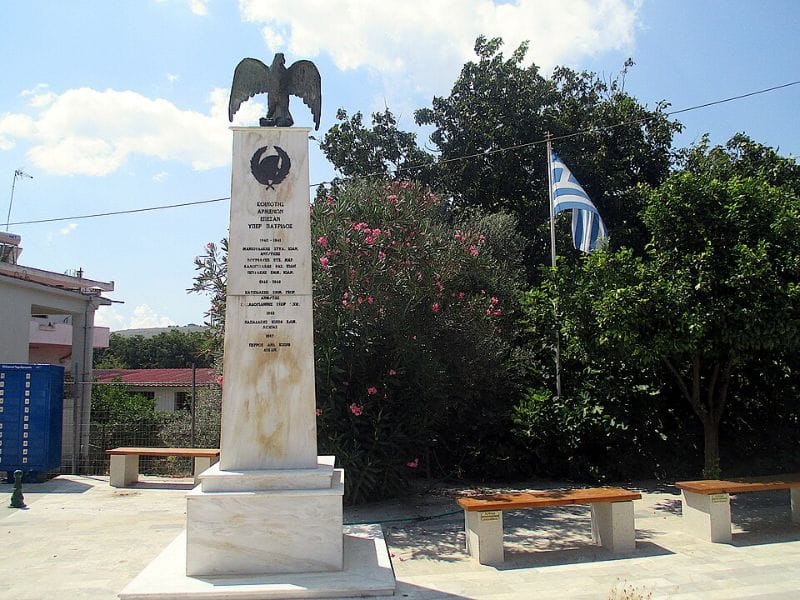
What defines the Apokoronas Villages is not a landmark but a feeling that builds gradually. You notice it while sitting in a square, or while walking without a destination. Life here unfolds in small, unremarkable gestures that together form something lasting.
In Vamos, old stone houses stand beside lived-in homes where laundry hangs from balconies and shutters open early. Workshops operate behind modest doors. Tavernas fill slowly as the day moves on. Nothing is theatrical. The village feels active because it is — not because it is preserved to appear so.
Armenoi feels cooler, greener. Plane trees spread wide branches above the square, and a narrow stream moves quietly nearby. The sound of water changes the mood of the place. People linger longer. Conversations stretch. Even the light seems softer under the leaves.
Gavalochori carries its history without drawing attention to it. Olive groves surround the village, and narrow lanes lead to small courtyards. A bakery opens before sunrise. Chairs gather in the shade by mid-morning. The pattern repeats each day, almost unchanged.
The Flavours That Define the Region
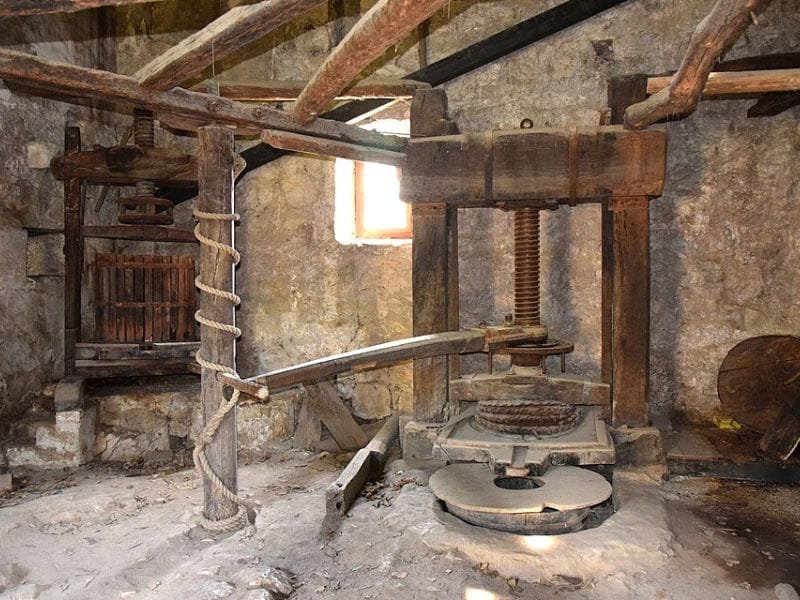
In the Apokoronas Villages, food does not arrive from elsewhere. It begins just beyond the last house. At a local olive mill, olives are pressed in a process that feels practical and familiar. There is no performance around it. The oil flows thick and green, destined for kitchens where it will be used generously and without ceremony. It is part of nearly every meal, absorbed into bread, vegetables, and conversation alike.
Higher in the hills, shepherds still use stone-built mitata. Inside, milk becomes cheese through careful timing and long practice. The method depends on climate and instinct as much as equipment. The work is quiet. Repeated. Essential.
Honey adds its own character. Beehives rest among wild thyme and low mountain herbs, and the resulting honey carries that landscape within it. The scent in the jar matches the scent in the air. In the Apokoronas Villages, flavour and place remain closely tied — one explaining the other without needing explanation.
A Landscape Shaped by Nature and Tradition
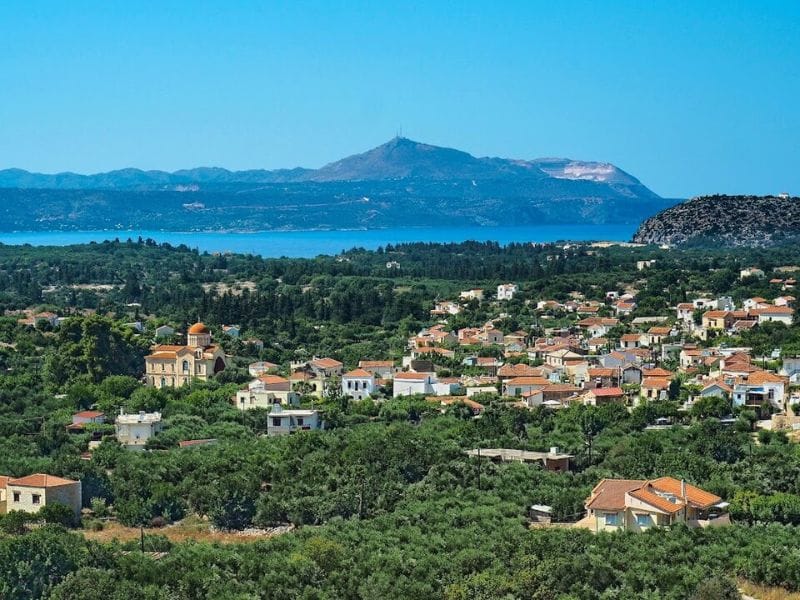
The land here feels balanced. Fertile fields sit beneath the outline of the White Mountains, and villages seem to grow naturally from their surroundings. Roads curve gently rather than cut sharply through the terrain.
Moving between the Apokoronas Villages, you pass olive groves that border courtyards, small farms that blend into residential streets. There is little separation between work and home. Traditions continue because they are still useful. They fit the environment.
Village squares often stay with you the longest. Coffee is brewed slowly. Someone pulls up another chair. Bread arrives at the table almost automatically, followed by olive oil, cheese, thyme honey. Nothing is introduced as special. It simply belongs.
Conclusion
The Apokoronas Villages offer a version of Crete that does not depend on display. Their character emerges through routine, through cultivation, through shared meals that follow familiar patterns. The scent of thyme, the weight of fresh bread, the sweetness of local honey — these details shape the experience quietly.
Time spent in the Apokoronas Villages reveals continuity rather than contrast. Land and community remain closely connected, and tradition persists not as memory, but as daily practice.