
Cart 0
Table of Contents
Introduction
When people think about Knossos, they usually picture kings, myths, or the Minotaur. But that’s only part of the story. The real life of the place happened somewhere else — in the routines of ordinary people.
The Minoan Civilians were the ones who actually made the city work. They built it, supplied it, and lived in it every single day.
More Than Just a Palace
Knossos didn’t feel like a single building. It was closer to a small, active town.
Different areas had different uses. Some were clearly meant for storage, others for production, and others for living. It all feels planned — but not in a rigid way.
Homes, for example, were surprisingly comfortable. Multiple rooms, light entering through open spaces, even basic drainage systems. Not what you would expect from the Bronze Age.
And something else stands out. There are no heavy fortifications. That says a lot. This was probably a society that depended more on trade and control of the sea than on constant defence.
Work That Connected the World
Daily life was strongly tied to work, but not in a narrow sense.
Farming was essential — olives, grapes, grains. That part is expected. But it doesn’t stop there.
Craft production was just as important. Pottery, textiles, jewellery. These weren’t only for local use. Many of them travelled far beyond Crete.
The Minoan Civilians were part of a wider network. Trade connected them with Egypt and the Near East. Ideas moved along with goods.
So this wasn’t an isolated community. It was active, outward-looking, constantly in contact with other cultures.
Food Was Never Just Food
Their diet feels familiar even now. Cereals, legumes, olive oil, fruits, fish.
Simple, yes — but not poor.
What matters more is how food was experienced. Meals were shared. They brought people together. Wine, honey, figs — these weren’t luxuries in the modern sense, but they added something extra.
There is also clear evidence of storage systems. Large jars, carefully used, helped preserve food. That creates stability — and that tells you this was a society thinking ahead.
A Different Kind of Society
Minoan life doesn’t look as rigid as other ancient cultures.
Women appear often in art, and not in the background. They seem active, visible, part of public and religious life.
There is also a strong sense of movement. Dancing, gatherings, performances. Even bull-leaping scenes suggest something more than survival — something closer to expression.
And then there is nature. Everywhere. Marine life, plants, animals. It’s not decorative by accident. It reflects a mindset.
People were not trying to dominate nature. They were living with it.
Religion Without Distance
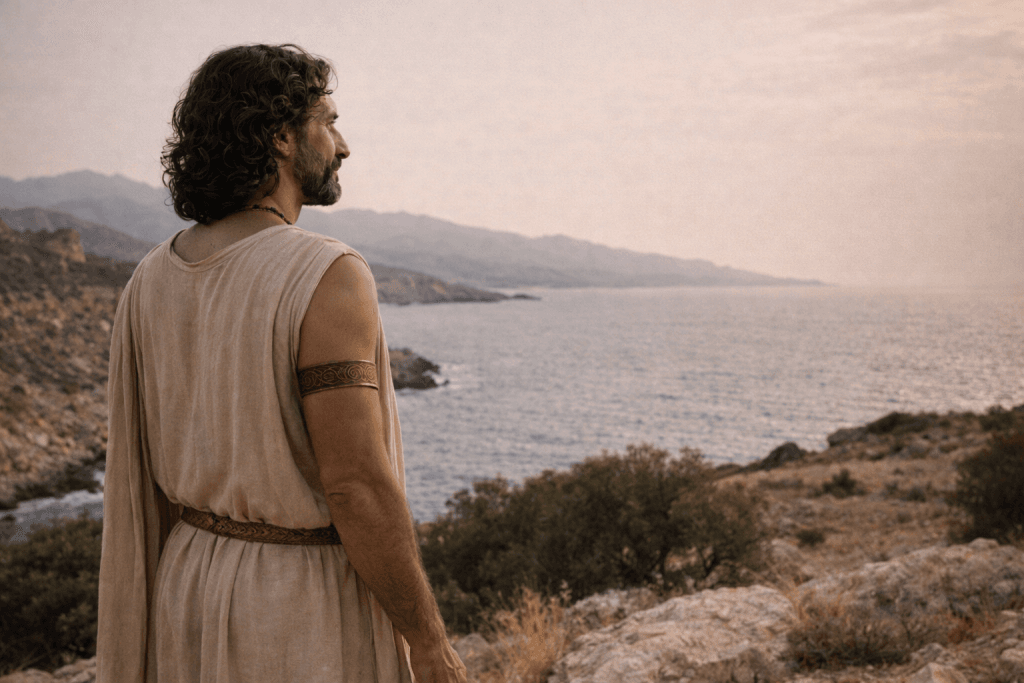
Religion existed, but not as something separate.
There were no massive temples dominating everything. Instead, belief was part of daily space. Homes, open areas, courtyards — all could have a ritual role.
Communities gathered, especially in places like Mount Juktas, but spirituality wasn’t limited to special occasions. It was continuous.
Conclusion
Looking at the Minoan Civilians changes the perspective completely.
This wasn’t just a place of myths. It was a functioning society — organized, creative, and connected.
What makes it stand out is not only what they achieved, but how natural it all seems. The balance between work, social life, and environment feels unexpectedly familiar.
In the end, the legacy of Knossos does not belong only to kings or legends. It belongs to the people who lived there — and quietly built something far more advanced than we often imagine.